Reconstructing the territory
I brought together historical maps, satellite imagery, and documentary sources to represent the valley’s urban growth over time.
Art, design, and programming
I develop interactive experiences through programming, design, and real-time graphics. My projects include frame-by-frame cartographic visualization, browser-based 3D simulation, location-aware augmented reality, and game visual systems.
The background is my own simulation: each visit generates a different landscape. Elevation and pressure guide the wind; the cursor leaves a current in its wake.
An animated reconstruction of Medellín and the Aburrá Valley across more than five centuries. Cartography traces how a city takes shape and helps us recognize the places we inhabit today.
Research, design, and production
Jan 2025 — Jul 2025Archivo Histórico de Medellín
Alcaldía de Medellín
I brought together historical maps, satellite imagery, and documentary sources to represent the valley’s urban growth over time.
I produced a frame-by-frame animation that connects records from different periods into a continuous geographic sequence.
The result combines data visualization, cartography, and audiovisual design to make historical and territorial information accessible to a broad audience.

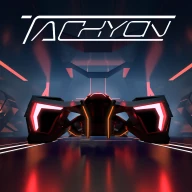
A multiplayer vehicle combat game where velocity drives damage. I built visual systems for movement, abilities, dynamic projectiles, global match events, and progressive vehicle destruction while leading gameplay design and documentation.
01:05
Built with React, TypeScript, and Three.js, this standalone web prototype combines configurable controls, 3D asset-loading workflows, a custom GLSL visualization shader, and a telemetry dashboard.
React Three Fiber handles the scene and Rapier provides physics. The recordings below show this browser implementation, developed separately from the Unreal Engine 5 game.
Load glTF, OBJ, and FBX models, adjust scene position and scale, and navigate with orbit-camera controls.
Adjust agent counts, spawn points, physics and combat parameters. A custom GLSL shader visualizes surface curvature.
Inspect speed, shots, kills, accuracy, crashes, and airborne time alongside trajectory markers and radar and raycast overlays.
Movement, damage, and feedback read from the same gameplay state. The visual layer communicates when the vehicle is building power, committing to an attack, or losing control.
Two systems connect materials, particles, geometry, and runtime values so the game world itself communicates damage and velocity.
Each ultimate communicates its area, direction, and duration while the vehicle remains in high-speed motion.
Material transitions, protective geometry, and temporal trails make each temporary state recognizable from the player and opponent perspectives.
These systems expose match ownership and weapon power through the arena itself, vehicle markers, and projectile rendering.
The maintained document defines movement states, collision factors, damage relationships, abilities, arena rules, scoring, session flow, and interface requirements for implementation and iteration.
Turning authority decreases as velocity rises. Braking restores control for aiming, while slopes, walls, and nitro rebuild the momentum that feeds projectile and collision damage.

A first-person movement shooter built by a six-person VFS team. I created the modular asteroid tool, configurable boundary feedback, and player-data-driven shaders and post-processing that populate and communicate its open arena.
The environment needed enough motion to remain active during a five-minute encounter while preserving the impression of open space.
Population, size distribution, motion, fragmentation, wrapping, ghost copies, and material fading were separated into tunable responsibilities.
A darkened ghost copy continues the departing trajectory while the original is recycled. The copy fades and keeps its spin, hiding the discontinuity.
The recorded configuration below shows the kind of control given to the level designer. Runtime safety and object lifecycle remained inside the implementation.
The level designer needed zones where the asteroid field suggested a direction of travel. I added a bias vector and strength value without replacing the system's random motion.
The final game includes the asteroid lifecycle, directional bias controls, killzone feedback, player-driven shaders, post-processing, and cinematic destruction sequences.
A tourism experience that connects historical characters and stories to physical places in Medellín. Visitors encounter the city’s history through augmented-reality avatars and geolocation.
As technical director, I developed the avatar production workflow from historical research and contextual design, using assisted animation and manual refinement. I integrated Mapbox and augmented-reality SDKs into the Unity mobile application and resolved dependency conflicts.
Maps where territory, connections, and risk distribution define the experience of play. Explore each one in War.app’s interactive viewer.
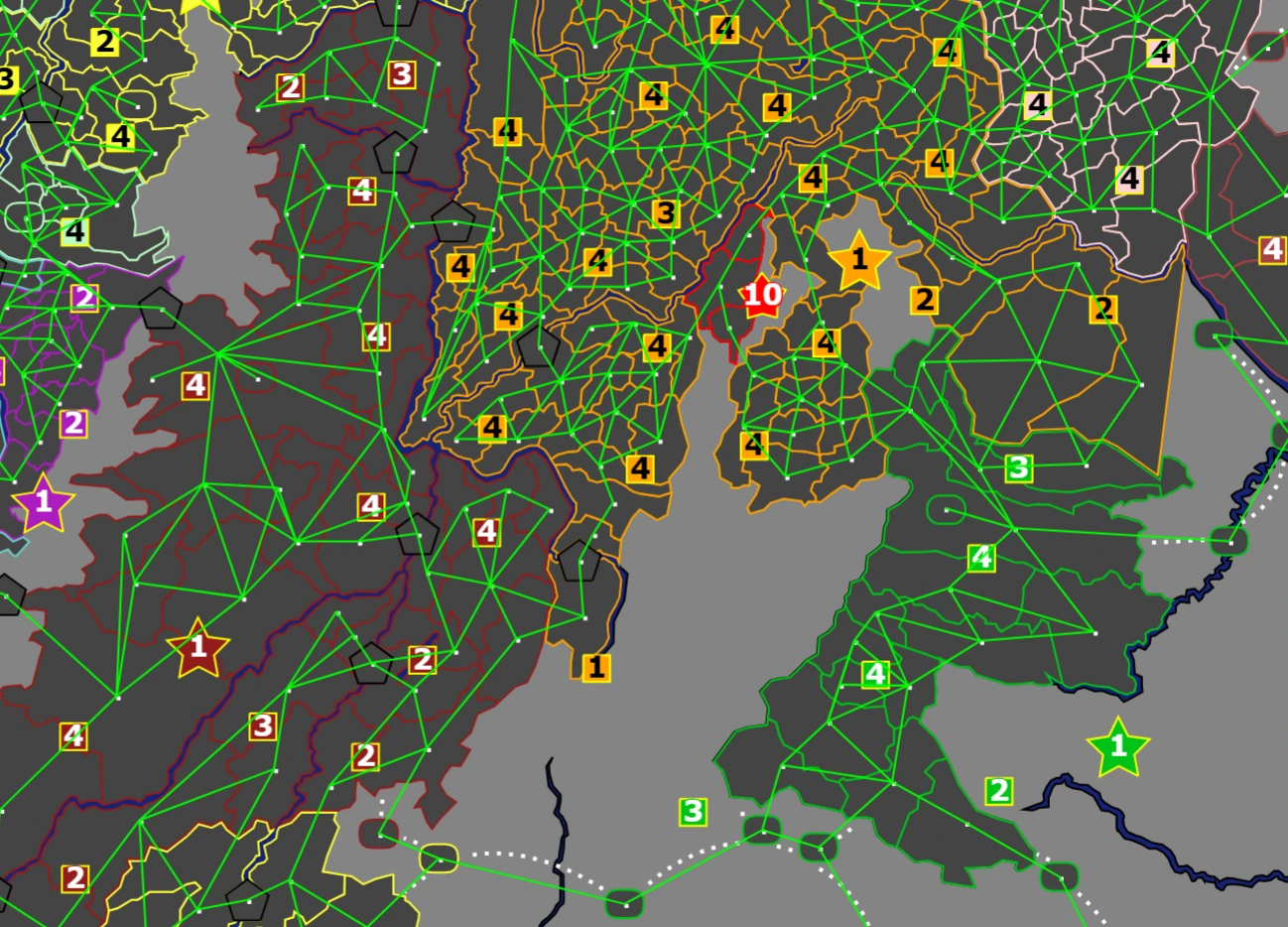
A dense territorial network organized into readable fronts. Expansion routes, defensive depth, and chokepoints create decisions at different scales.
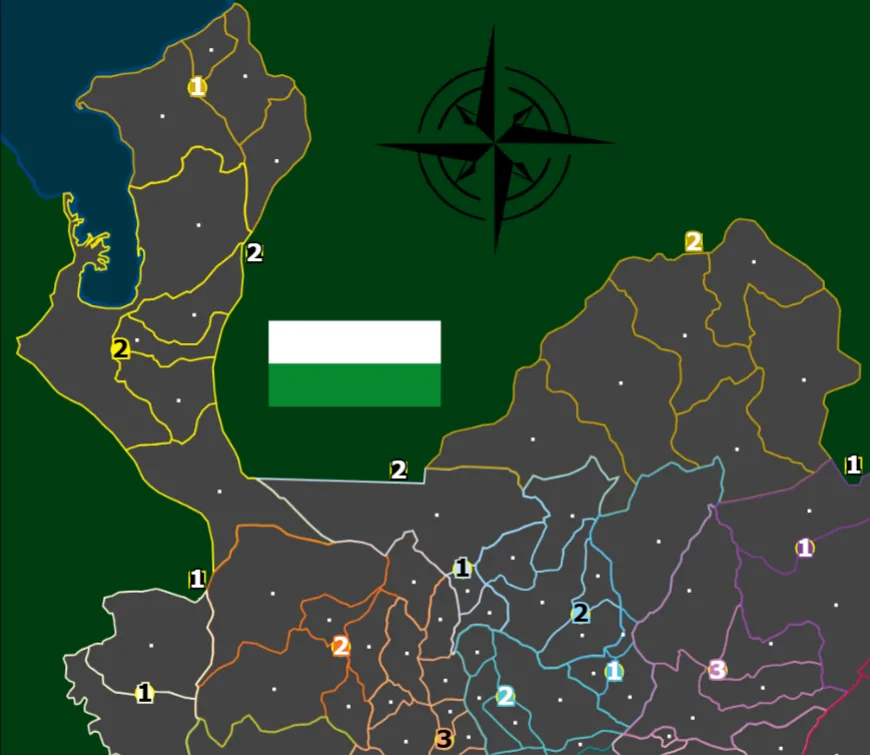
Regional conquest and close-scale city control share one map. Changes in territorial density shape how players read routes, borders, and local dominance.
Explore in War.app ↗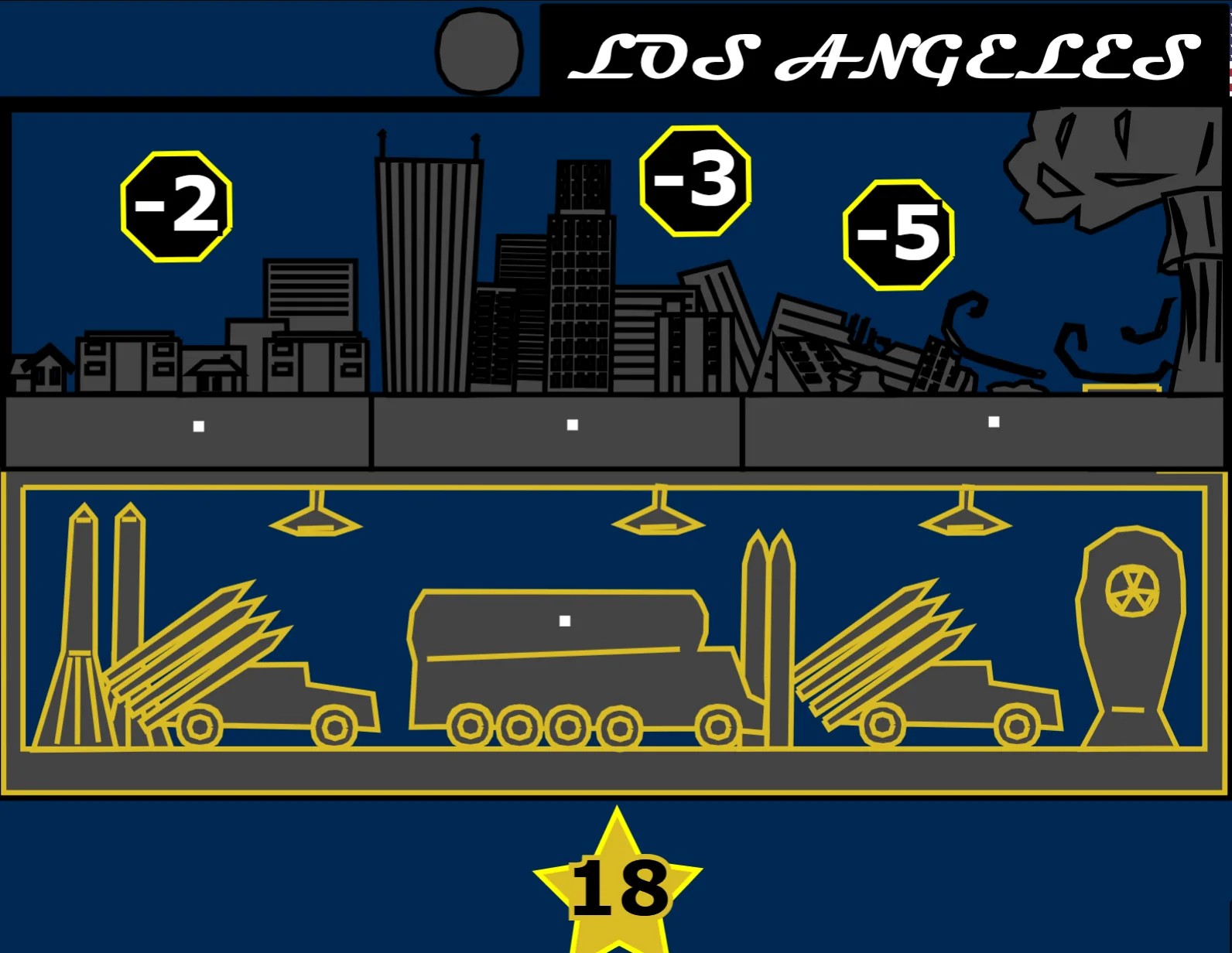
Base game rules become contaminated sectors, safe zones, and sacrifice areas. Dangerous routes offer stronger rewards, making exposure part of territorial planning.
Explore in War.app ↗A Unity procedural-world prototype combining decision-tree terrain generation, Perlin and Voronoi city maps, and flag and emblem systems that vary sprites and materials across generated cultures.
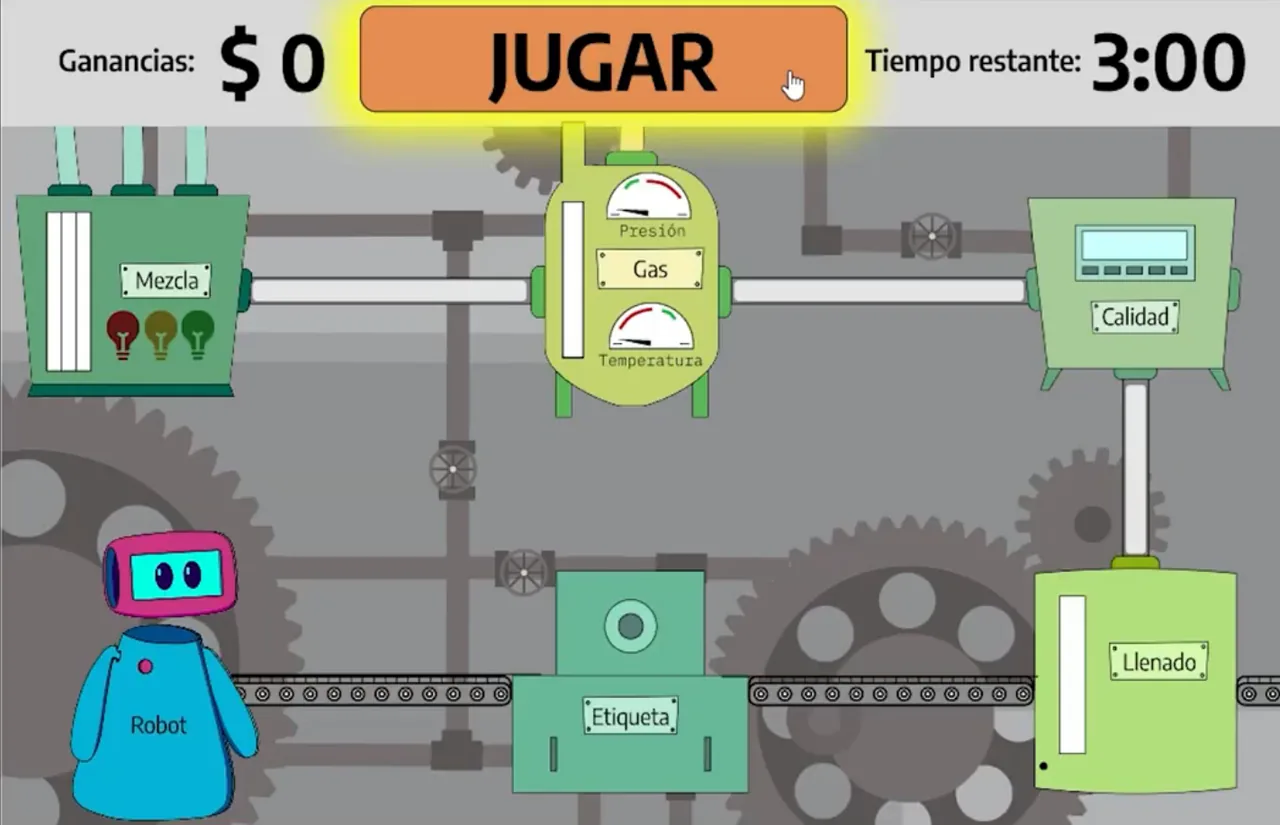
A production-line minigame built in Figma with variables, conditional logic, scoring, and timed tasks. The prototype tests the rhythm of actions and their visual feedback.
Watch the prototype ↗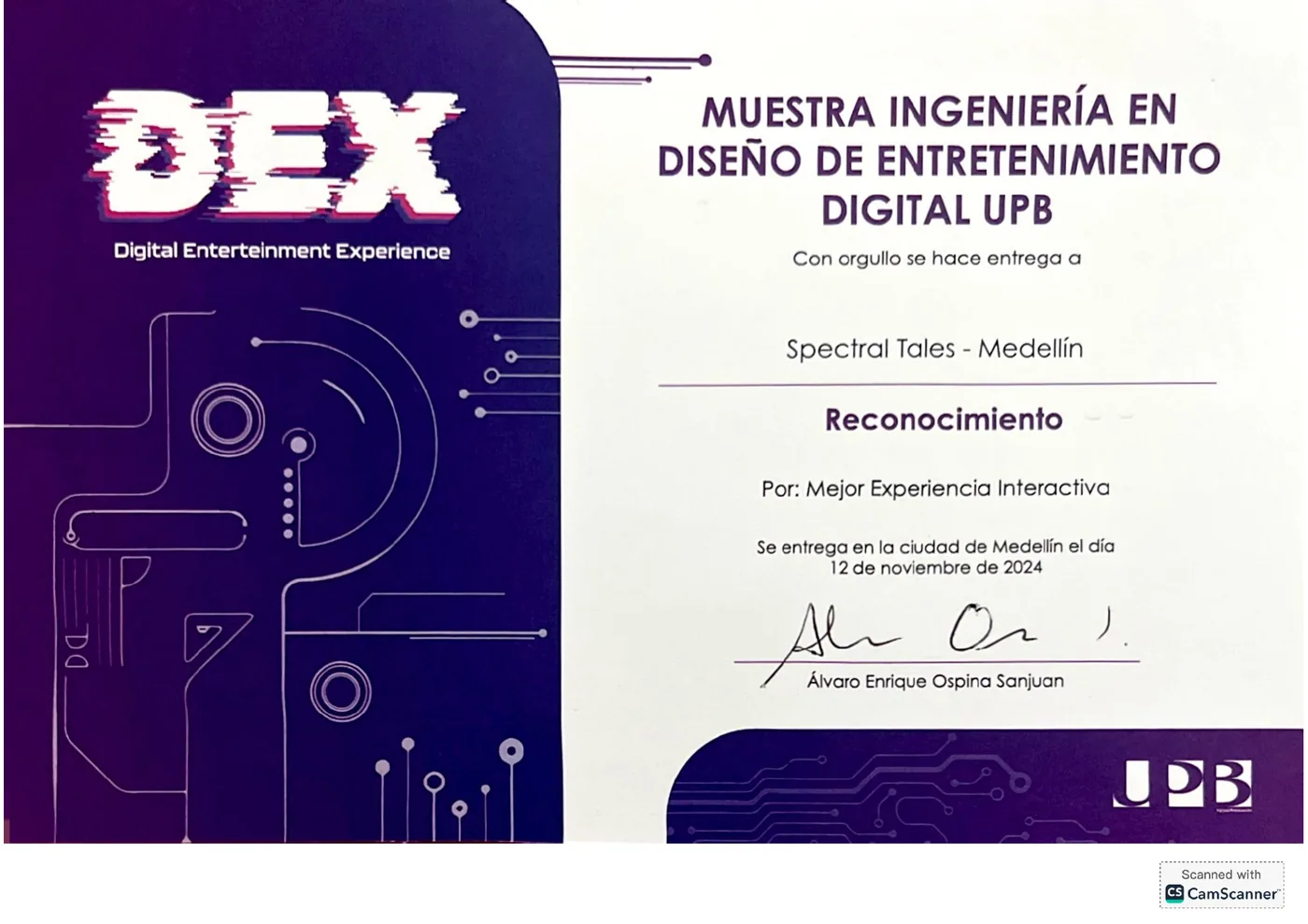 DEX · 2024
Medellín Spectral Tour received this recognition at the DEX showcase for its mobile augmented-reality experience and historical storytelling.
View certificate ↗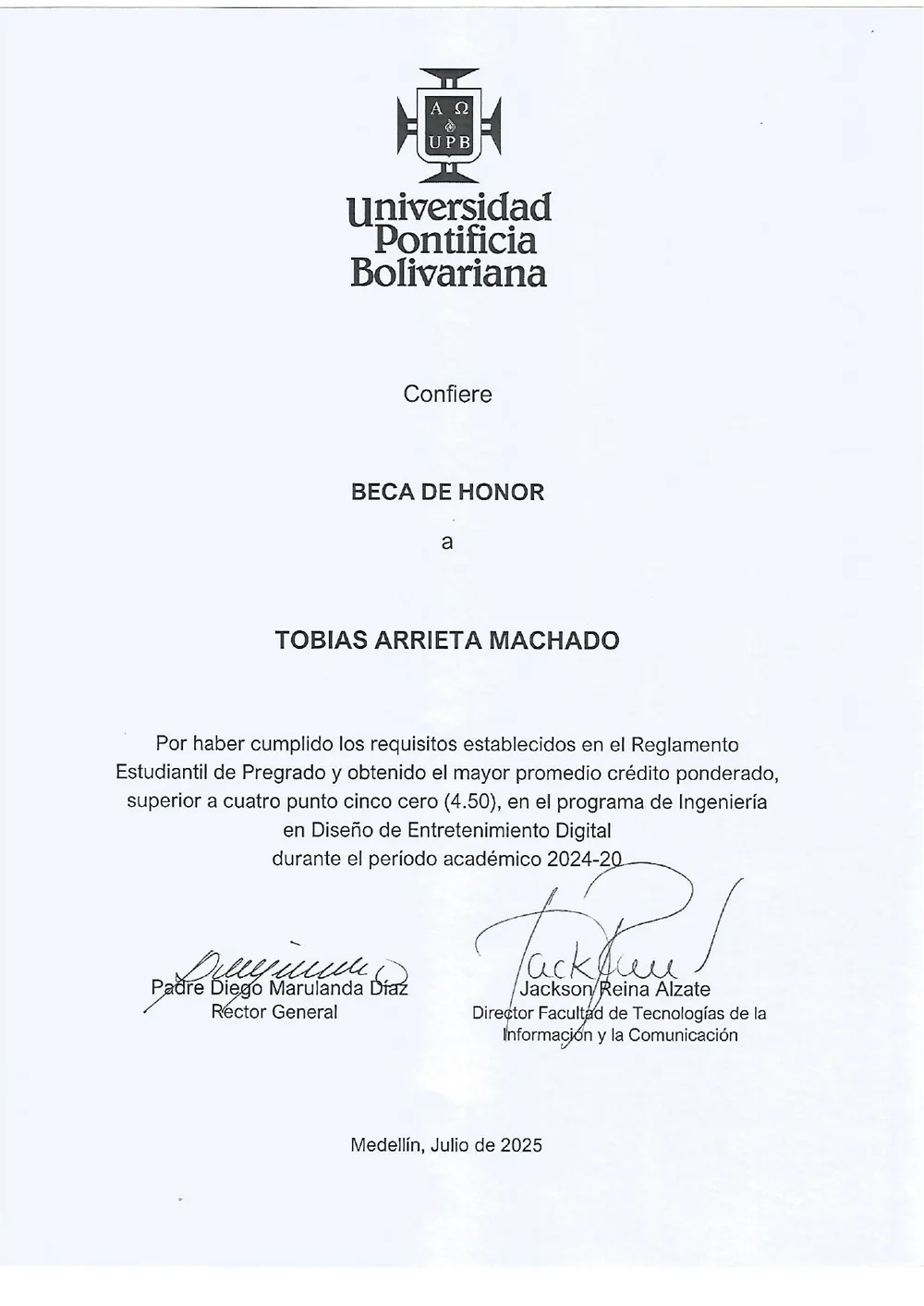 UPB · 2024
Awarded by Universidad Pontificia Bolivariana for the highest weighted GPA in the Digital Entertainment Design Engineering program, above 4.50.
View recognition ↗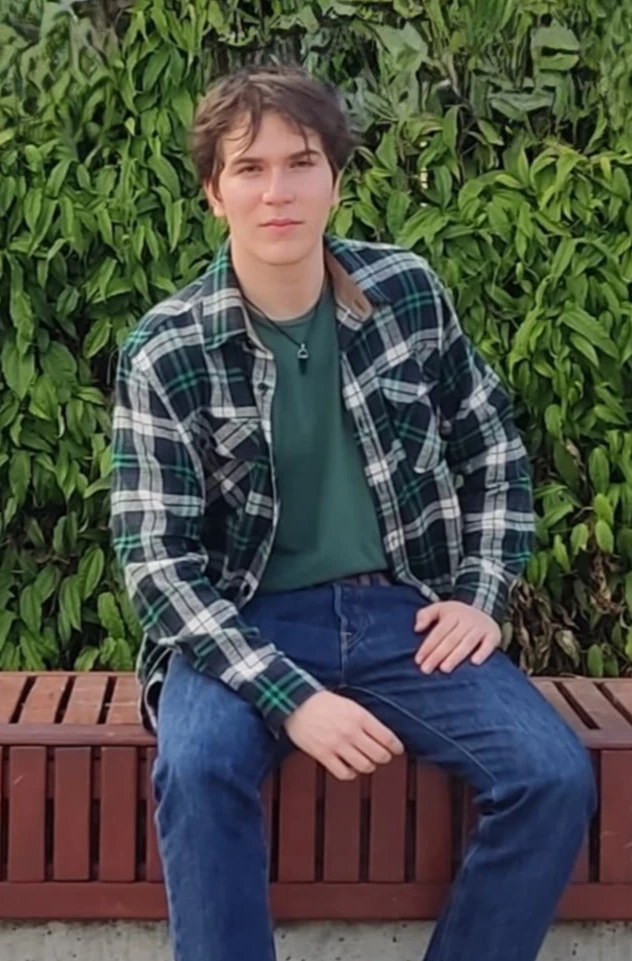
I’m an interactive experience developer based in Medellín, Colombia. My background in Digital Entertainment Design Engineering and programming connects artistic work, design, and technical implementation.
My work includes an animated reconstruction of Medellín’s urban growth, a Unity mobile AR experience with Mapbox, a React and Three.js simulation prototype, and procedural worlds and visual systems for games. I work across interfaces, physics, shaders, and visual and audio feedback.
I work with art, design, research, and programming teams: defining production workflows, building prototypes, and resolving the technical challenges of turning an idea into a working experience.
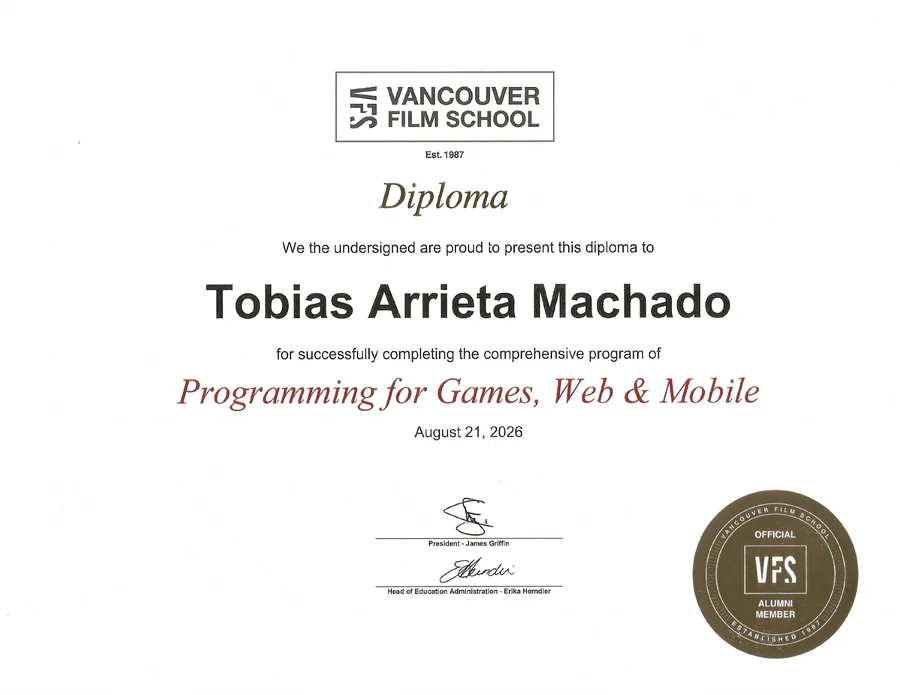 View diploma ↗
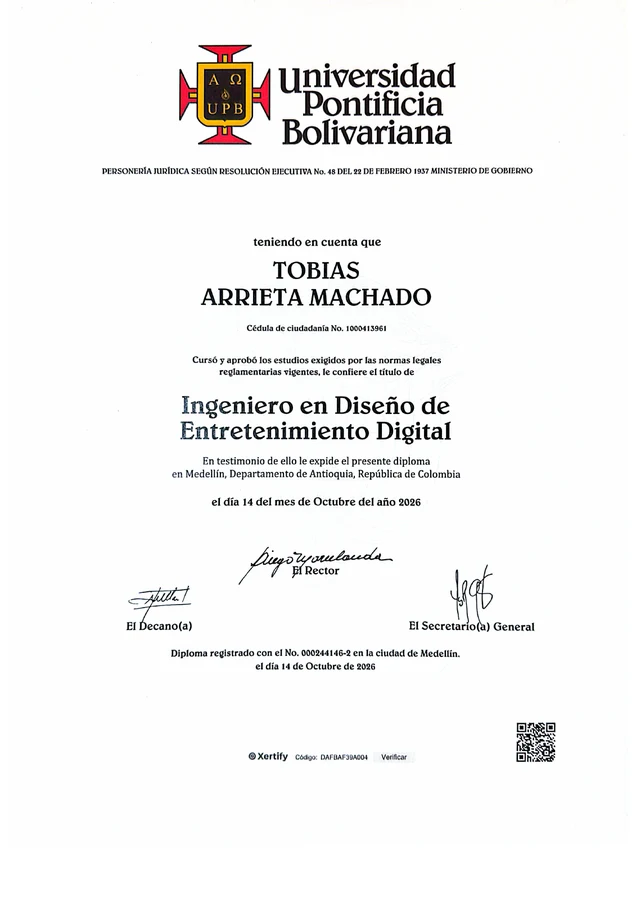 View diploma ↗